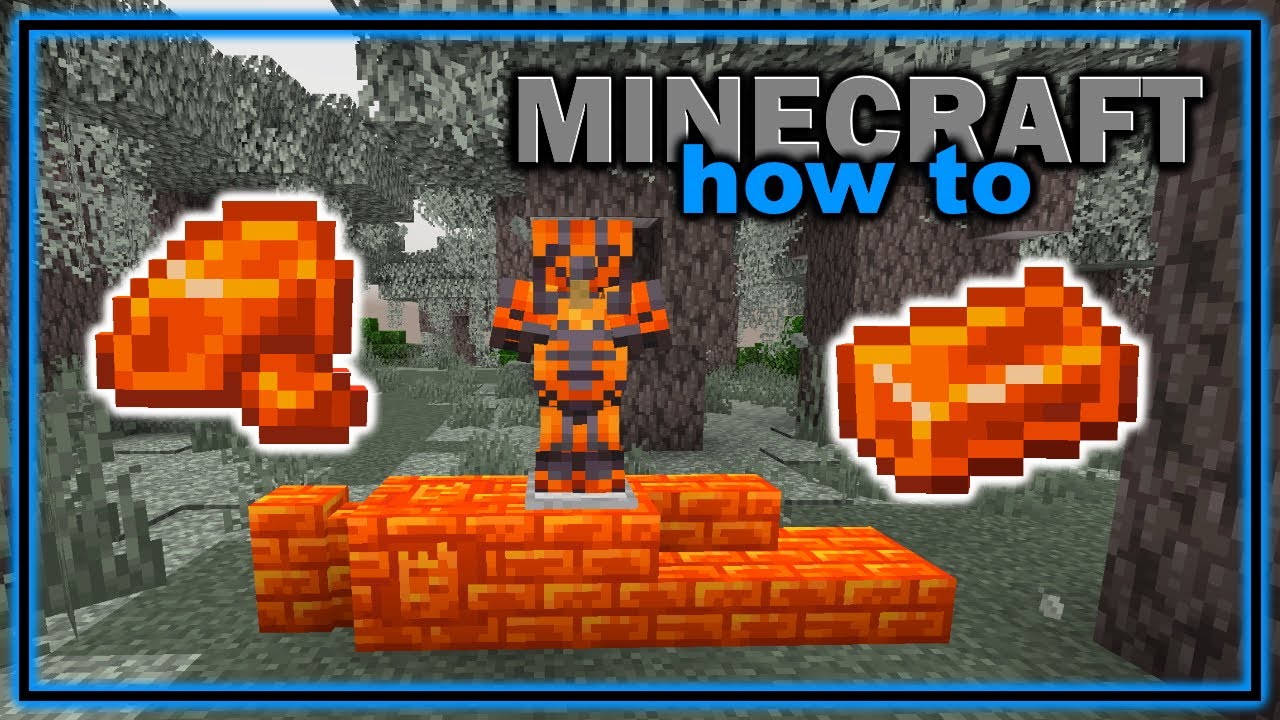
If you’ve booted up Minecraft recently and stumbled into a strange, pale-colored forest full of ghost-white trees and eerie moss, you’ve probably already run into Resin — or at least the creepy mob that guards it. Resin showed up in the Pale Garden update (patch 1.21.4, sometimes called the Winter Drop) and quickly became one of the more interesting materials to chase down, mostly because getting it isn’t as simple as swinging a pickaxe at a rock.
This block has a strange origin story tied to a mob called the Creaking, an eerie building material with a warm amber glow, and a farming loop that rewards patience and a bit of nerve. If you’re the type of player who likes decorating builds with unique blocks, or you just want that satisfying orange brick aesthetic for a base, this guide walks you through everything: what Resin actually is, where to find it, how to farm it efficiently, and what you can build once you’ve got a stockpile.
Let’s get into it.
What Exactly Is Resin in Minecraft?
Resin isn’t a block you mine out of the ground like iron or coal. In its raw form, it’s called a Resin Clump — a small, amber-colored item that looks a bit like a chunk of gold ore but with a translucent, honey-like glow to it. It’s not smelted from ore, it’s not grown from a seed, and it doesn’t spawn naturally scattered across the world the way flowers or berries do.
Instead, Resin Clumps are generated through a very specific, slightly unsettling mechanic involving a hostile-ish mob called the Creaking and a decorative block called a Creaking Heart. When a Creaking gets struck, resin clumps physically appear on the pale oak logs surrounding its linked heart. It’s less “mining” and more “harvesting a strange magical byproduct,” which is honestly part of what makes it fun.
Once you’ve collected clumps, you can turn them into a handful of useful items:
- Blocks of Resin — a solid, smooth building block
- Resin Bricks — made by smelting clumps in a furnace
- Resin Brick variants — stairs, slabs, walls, and a chiseled version
- Armor Trims — an amber/orange trim pattern applied at a smithing table
- Creaking Hearts — yes, you can craft your own, which matters a lot for farming (more on that below)
The color palette lands somewhere between honey, amber, and burnt orange, which makes it a popular choice for players building autumn-themed houses, cozy cabins, or anything that needs a warm accent against darker wood tones.
Where Does Resin Come From? (The Pale Garden Biome)
The primary — and really only reliable — source of Resin is the Pale Garden, a rare biome that was added alongside the Creaking mob. If you haven’t seen one yet, it’s worth describing what you’re looking for, because it’s easy to walk right past one without realizing it.
What the Pale Garden Looks Like
The Pale Garden is essentially a spookier cousin of the Dark Forest biome. Instead of the usual greens and browns, everything here is washed out and pale:
- Pale Oak trees with bone-white bark and pale, drooping leaves
- Pale hanging moss dangling from branches, similar in style to vines
- Pale moss blocks and carpets covering parts of the ground
- A general fog and desaturated color palette that makes the whole biome feel muted, almost black-and-white, even in daylight
It’s genuinely one of the more atmospheric biomes in the game, closer in tone to a horror movie forest than typical Minecraft scenery. Mojang clearly designed it to feel unsettling, and if you’re playing with sound on, you’ll notice the ambience leans into that too.
Finding a Pale Garden
Pale Gardens are rare, and they tend to generate near or within Dark Forest biomes, particularly in hilly or elevated terrain. There’s no guaranteed landmark that points you toward one, so exploration is mostly a matter of covering ground in forested, higher-elevation areas and keeping an eye out for that telltale pale coloring breaking up the tree line.
If you’d rather skip the guesswork:
- Use the locate command (if cheats are enabled on your world or server): typing
/locate biome pale_gardenwill give you the coordinates of the nearest one. - Explore Dark Forests first. Since Pale Gardens tend to border or sit near Dark Forests, treating Dark Forest biomes as your search zone narrows things down considerably.
- Watch your map / minimap mods. Some third-party map tools will color-code biomes, which makes rare ones like this much easier to spot from a distance.
Since these biomes aren’t huge, once you find one, you may only get access to a handful of Creaking Hearts naturally — which is exactly why farming techniques (covered later) become so useful.
Meet the Creaking: The Mob That Guards Your Resin
You can’t talk about Resin without talking about the Creaking, because the two are inseparable. The Creaking is a tall, spindly, wooden mob that looks like an animated tree limb — unsettling by design, and mechanically unique compared to almost anything else in the game.
Creaking Behavior: The Rules You Need to Know
The Creaking only exists at night or during thunderstorms, and it despawns the moment the sun comes up (unless its heart is destroyed first, which kills it immediately regardless of time). A few quirks make it stand out:
- It’s invulnerable to direct combat in most circumstances. Hitting the Creaking itself typically won’t work like fighting a zombie or skeleton — you’re not meant to just swing a sword at it and expect normal results.
- It freezes when you look at it. As long as you’re facing the Creaking, it can’t move or attack you. Look away, and it starts creeping closer.
- It’s tied to a Creaking Heart. Every Creaking is linked to a specific Creaking Heart block, which spawns naturally between two vertically stacked Pale Oak logs. Destroy the heart, and the Creaking dies instantly.
- Striking it generates Resin. This is the key mechanic. When you hit a Creaking (while it’s active), it releases a burst of orange particles that trace a path back to its linked heart — and Resin Clumps appear on the pale oak logs around that heart.
The Basic Loop: Taunt, Strike, Harvest
Here’s the process in practice:
- Enter the Pale Garden at night (or during a thunderstorm).
- Locate a Creaking. It’ll usually be somewhere within a short distance, moving toward you when you’re not looking.
- Face it head-on to freeze it in place, then land a hit.
- Watch for the trail of orange particles — follow it back to the tree housing the Creaking Heart.
- Resin Clumps will appear on the surrounding pale oak logs. Break them with any tool (even bare hands work, though a tool speeds things up).
- There’s roughly a five-second cooldown before you can strike the Creaking again and trigger another batch of clumps.
- Repeat this cycle for as long as you want, or until the Creaking despawns at dawn.
If you’d rather end the encounter early and lock in your resin haul, you can destroy the Creaking Heart directly. This kills the Creaking on the spot (regardless of the time of day) and drops its own handful of Resin Clumps — typically in the range of one to three, with a Fortune-enchanted tool improving your odds of a bigger haul.
Alternative Ways to Deal With a Creaking
Not everyone wants to babysit a taunt-and-strike loop all night. A couple of alternatives:
- Explosions. TNT or other explosive sources can destroy a Creaking Heart directly, which is a faster (if messier) way to end the encounter and collect the heart’s drop.
- Tamed wolves. Wolves you own can attack the Creaking on your behalf, which is a handy workaround if you don’t want to deal with the “don’t look away” mechanic yourself.
- Fire. Since Pale Oak logs and moss are flammable but Creaking Hearts themselves are fireproof, some players set the general area ablaze as a way of clearing out obstacles rather than harming the heart.
The Second Source: Woodland Mansions
If exploring a creepy biome at night and playing staring contests with a wooden monster isn’t your idea of a good time, there’s a second, calmer option: Woodland Mansions.
These massive structures, which generate within Dark Forest biomes, occasionally contain Resin Clumps as loot inside their chests. It’s a much more passive way to get your hands on some Resin — no combat mechanics required, just the usual mansion risks (Vindicators, Evokers, and the general maze-like danger of the structure itself).
The downside is that this method is unreliable. You’re at the mercy of loot tables, and you might only walk away with a handful of clumps even after clearing several chests. It’s a nice bonus if you’re already raiding a mansion for other loot like totems of undying or enchanted books, but it’s not a method you’d want to rely on if you need a large supply.
How to Set Up a Renewable Resin Farm
This is where Resin becomes genuinely interesting from a gameplay perspective. Because Creaking Hearts can be crafted once you’ve gathered enough materials, Resin is a fully renewable resource — you’re not limited to whatever naturally spawns in the Pale Garden you found.
Step 1: Get Your First Creaking Heart (or Enough Clumps)
You have two paths here:
- Find a natural Creaking Heart in a Pale Garden and harvest it directly, or
- Collect nine Resin Clumps, craft them into a Block of Resin, and then combine that block with two Pale Oak logs to craft your own Creaking Heart.
Either way, once you have a heart in hand, you’re no longer dependent on natural world generation.
Step 2: Gather Pale Oak Logs
You’ll need Pale Oak logs to build your farm structure, since Creaking Hearts only activate when placed between two of them, stacked vertically. If you don’t have easy access to Pale Oak trees, note that Pale Oak saplings can sometimes be obtained through a Wandering Trader, giving you a way to grow your own supply without repeated trips back to a Pale Garden.
Step 3: Build the Farm Structure
A simple, functional setup looks like this:
- Place a Pale Oak log.
- Place your Creaking Heart directly on top of it.
- Place a second Pale Oak log on top of the heart.
- Light the surrounding area well enough to prevent other hostile mobs from spawning and interfering, but make sure the immediate area around the heart can still trigger a Creaking spawn at night (Creakings need a certain amount of darkness nearby to appear).
- Wait for nightfall. A Creaking should spawn within a short radius of the heart — commonly cited as within roughly 32 blocks.
Step 4: Automate the Collection (Optional but Efficient)
Manually breaking clumps off logs works fine for casual play, but if you want a genuinely efficient farm, players have found ways to streamline the process:
- Piston-based log ejection. Set up pistons that push the Pale Oak logs (with clumps attached) so the resin drops off and falls into a collection stream.
- Water streams and hoppers. Direct fallen clumps into flowing water that channels them into a hopper-and-chest collection system, so you’re not manually picking items off the ground.
- Repeatable taunt stations. Some designs box the Creaking into a small area where you can safely and repeatedly strike it from a fixed position, minimizing movement and risk while maximizing the number of hits (and therefore clumps) you get per night.
None of this is strictly necessary if you just want enough Resin for a small decorative build, but if you’re planning a large project — like an entire base with Resin brick accents — automating the harvest will save you a lot of tedious nights.
A Quick Note on Fortune
Using a Fortune-enchanted tool when breaking a Creaking Heart increases the number of Resin Clumps you get from that final drop, generally allowing for a higher haul than the standard one-to-three range. It’s a small thing, but worth keeping in mind if you’re planning to retire a particular heart and want to squeeze out a bit more value before you do.
What to Do With Resin: Crafting and Uses
Once you’ve got a decent stash of clumps, here’s what you can actually do with them.
Blocks of Resin
The most basic craft: fill all nine slots of a crafting table with Resin Clumps to produce a Block of Resin. This solid, amber-toned block can be mined instantly with any tool, making it convenient for large-scale building without slowing you down.
Resin Bricks and the Brick Family
Smelt Resin Clumps in a furnace to produce Resin Bricks. From there, you can craft the full “brick block family,” which typically includes:
- Resin Brick blocks
- Resin Brick stairs
- Resin Brick slabs
- Resin Brick walls
- Chiseled Resin Bricks (a decorative variant with a distinct carved pattern)
These are purely decorative — there’s no functional redstone or structural bonus attached to them beyond normal building properties — but the warm orange tone makes them a favorite for cozy, autumn-themed, or “haunted cottage” aesthetics that pair nicely with the Pale Garden’s overall vibe.
Armor Trims
Head to a smithing table with a piece of armor, an armor trim template, and a Resin Clump, and you can apply a distinctive amber/orange trim pattern to your gear. It’s a nice option if you want armor that visually ties into the Pale Garden theme without needing to constantly return to the biome.
Crafting New Creaking Hearts
As covered above, this is arguably the most important use of Resin from a gameplay-loop perspective. Turning clumps into a Block of Resin and then combining that with Pale Oak logs lets you build your own Creaking Hearts wherever you want them — which is what makes sustainable resin farming possible in the first place.
Decorative Ground Cover
Some players also use loose Resin Clumps scattered across paths and surfaces for decoration. Their sparkling, particle-heavy appearance on the ground has been compared to fallen cherry blossom petals, giving builds a bit of shimmer and warmth without needing full blocks.
Tips for Efficient Resin Farming
A few practical tips to make your Resin runs less painful:
- Bring good gear before you go. The Pale Garden and its Creakings, along with the general nighttime conditions you’ll be farming in, mean you should show up prepared — solid armor, a weapon, food, and maybe some torches for visibility.
- Don’t panic about “not being able to fight it.” New players often assume something’s broken when their sword doesn’t seem to affect the Creaking the way they expect. Remember the core mechanic: face it to freeze it, strike when you get the chance, and follow the particle trail.
- Prioritize finding or crafting a Creaking Heart early. Once you have one, you’re free from relying on rare natural biome generation, and you can build your farm exactly where you want it — ideally close to your main base.
- Stack up on Pale Oak logs in advance. Since your farm structure depends on them, and Pale Oak isn’t the easiest wood to source outside the Pale Garden itself, grab extra logs (or saplings) whenever you’re in the biome so you’re not making repeat trips.
- Consider a small perimeter build. A contained little “shrine” area around your Creaking Heart — enclosed but with a clear line of sight — makes the taunt-and-strike loop safer and more efficient, since you’re not chasing the Creaking around open terrain.
- Use Fortune for your final hit. If you’re planning to destroy a heart anyway (say, to relocate your farm), enchant your tool with Fortune first to maximize that last resin payout.
- Don’t sleep on Woodland Mansions. Even though it’s not a reliable primary method, grabbing bonus Resin Clumps from mansion chests while you’re there for other loot is basically free value.
Final Thoughts
Resin is one of those additions that manages to be both a little creepy and genuinely satisfying to farm once you understand the loop. It rewards you for engaging with one of Minecraft’s more atmospheric biomes instead of just handing itself over through simple mining, and the payoff — warm, amber-toned bricks and blocks — is distinctive enough to be worth the effort for builders chasing a specific look.
Whether you’re hunting down your first natural Pale Garden, setting up an automated night-farm back at base, or just picking up stray clumps from a Woodland Mansion chest along the way, you now have everything you need to start stockpiling Resin and putting it to use in your next build. Just remember: don’t look away from the Creaking unless you mean to.

Alex Smith
I’m a dedicated gamer who loves exploring games, mastering gameplay mechanics, and sharing gaming knowledge. I stay updated with the latest releases, tips, and strategies to improve performance and enjoyment. Gaming is my passion and my skill.